

Remembering Speedy
Remembering Jeret "Speedy" Peterson
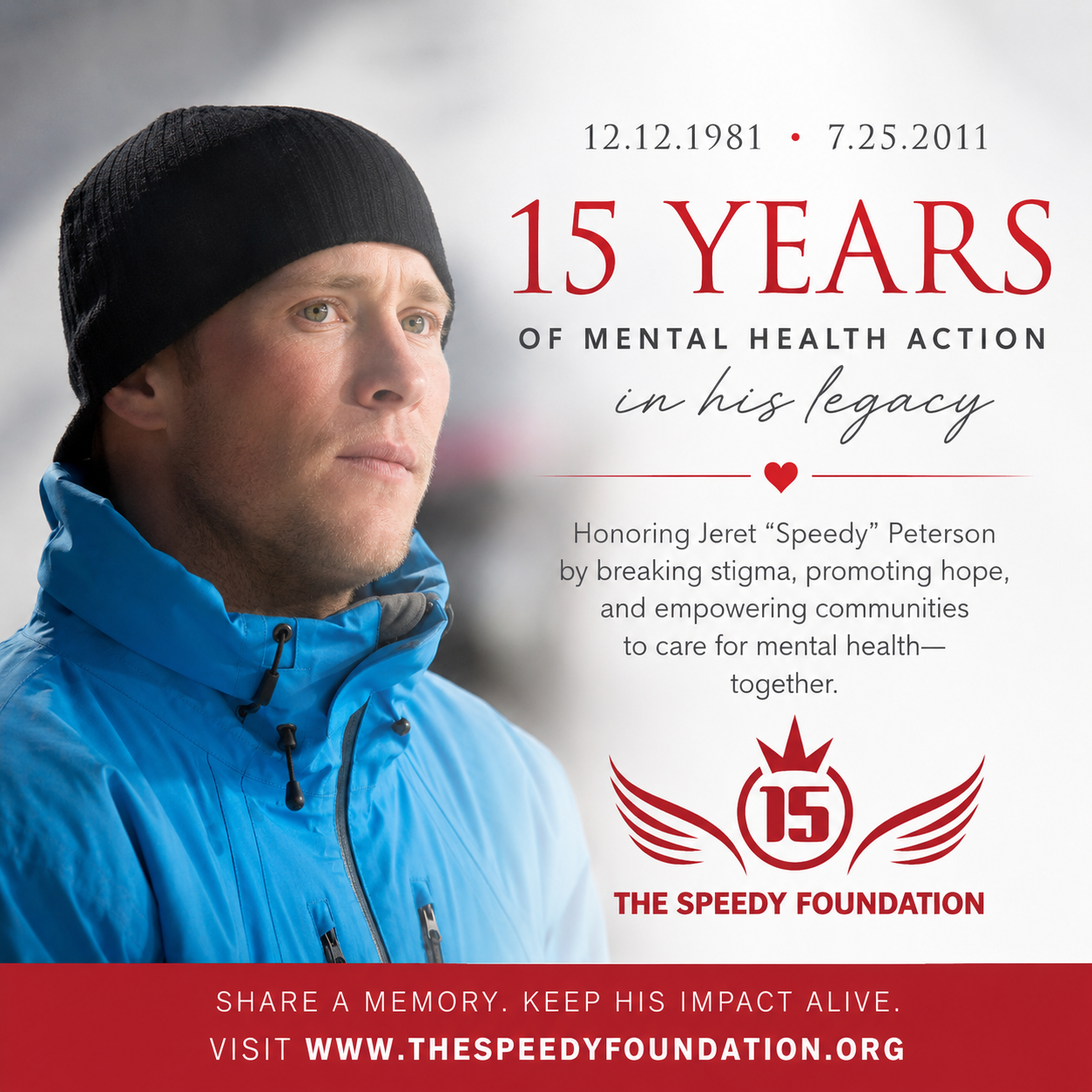
Fifteen years ago, we lost Jeret "Speedy" Peterson, but his story continues to inspire hope, courage, and action. Speedy was an Olympic medalist, a fierce competitor, and a deeply compassionate and incredibly charismatic person whose life reminds us that even those who achieve extraordinary success can, and often do, struggle with their mental health.
In his memory, The Speedy Foundation has spent the past 15 years working to break the stigma surrounding mental illness and suicide, expand access to lifesaving education and support, and build stronger, more connected communities. Every conversation started, every life touched, and every act of kindness carries his legacy forward. We invite you to honor Speedy by sharing your memories, learning his story, and joining us in creating a future where no one has to struggle alone. Click the button below to share a memory and celebrate the legacy that continues to make a difference every day.
Jeret “Speedy” Peterson
Speedy’s Life
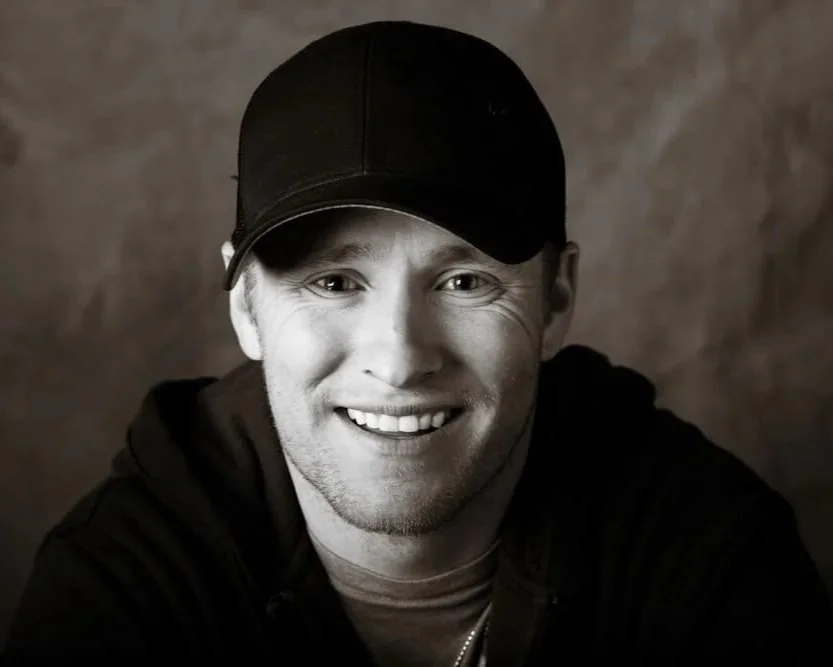
An Olympic aerialist, Jeret “Speedy” Peterson grew up in Boise, ID, skiing at nearby Bogus Basin. As an athlete, he was successful at the highest level of his sport, winning an Olympic silver medal at Vancouver in 2010 and capturing the hearts of fans worldwide with his trademark quintuple twisting triple flip, the “Hurricane”.
As a person, he was always known as someone who looked out for others and cared deeply for his family and friends. Those who knew him, remember Speedy as an advocate for his own struggles with mental health and substance abuse. In 2011, Speedy lost his battle to depression, taking his life at age 29.
When he was young, Speedy was excitable, friendly, and full of energy. He started skiing at Bogus Basin when he was 7 years old. When Speedy wasn’t up on the hill, he was often getting into trouble with his friends. He jumped out of a second story window onto a trampoline below. He got launched off a couch tied to the back of a pickup truck. He bought firecrackers and sold them to classmates at recess.
Looking for an outlet for all this energy, Speedy’s mother, Linda, sent him to a freestyle skiing camp in Lake Placid, NY when he was just 11 years old. It was at this camp that Speedy earned his nickname. Because of his big helmet and race-checkered life jacket, coaches decided he looked like the cartoon character "Speed Racer".
Speedy began focusing on aerials at age 14 and quickly advanced in skill. He won the 1999 National Junior Aerials title, collected aerials bronze at the 2000 and '01 Junior Worlds Championships and was 2001 Freestyle Junior Skier of the Year, selected by Ski Racing magazine.
As his career progressed, Speedy developed his signature aerial trick, the “Hurricane”. This quint-twisting, triple back-flip 55 feet into the air helped him win the 2005 World Cup in Lake Placid. To date, Speedy is the only athlete to have successfully landed this trick consistently on the World Cup circuit.
Salt Lake City 2002 was Speedy’s first Winter Olympics. He took the place of teammate Emily Cook, who had broken her feet just weeks before during training. To make sure she was still involved, Speedy wrote “Hi, Emily” on the palms of his gloves and showed them to the cameras during the competition. “It was bittersweet,” Cook said in 2012. “Looking back, to be quite honest, I’m not sure I was prepared to be the best in the world then.” Speedy went on to score 9th place.
At his first Olympics, Speedy also paid homage to his friends back home. Speedy had a custom belt added to his uniform for the competition, a circle with five names engraved on it, his friend group from high school that called themselves The Circle. “Even though he was so busy, had to do so much stuff with the Olympic team … He made all the time for us, we hung out the whole time, and it was a blast,” said Tyler Neill, part of The Circle.
Olympic Games
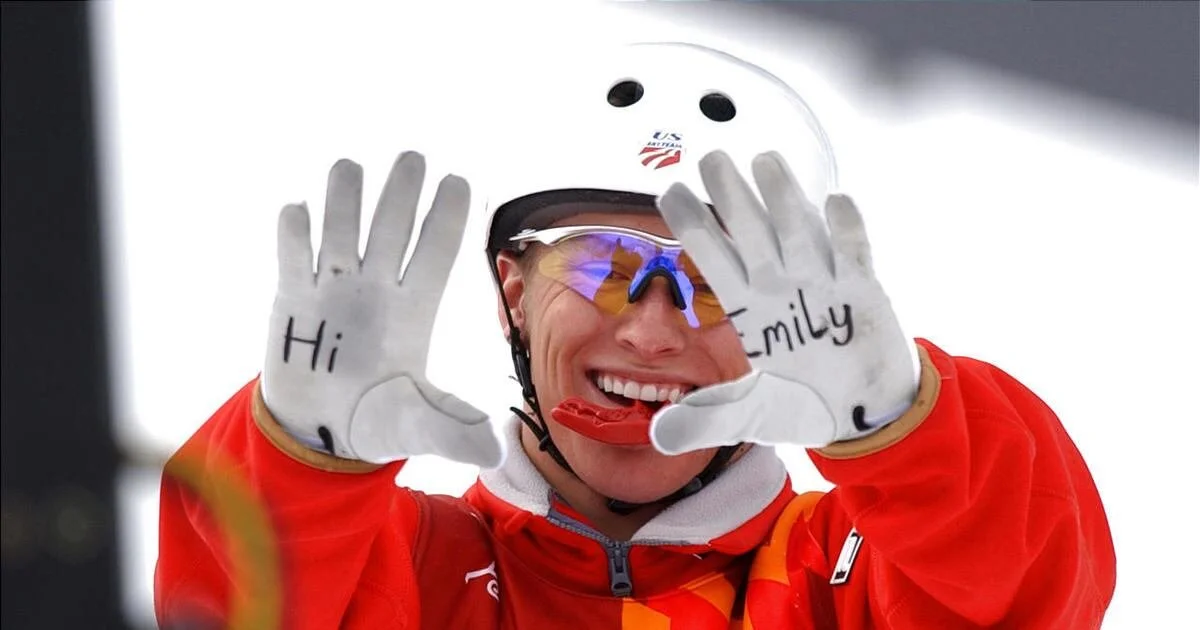
Speedy showing off his gloves, 2002 Olympic Games
At the 2006 Winter Olympics in Turin, Italy, Speedy placed 7th in Aerials. After a short break, Speedy got back to training and qualified for the 2010 Winter Olympics in Vancouver, Canada. Here he successfully performed the Hurricane and earned a silver medal. After stepping off the podium, Speedy told reporters, “I know that a lot of people go through a lot of things in their life, and I just want them to realize they can overcome anything.”
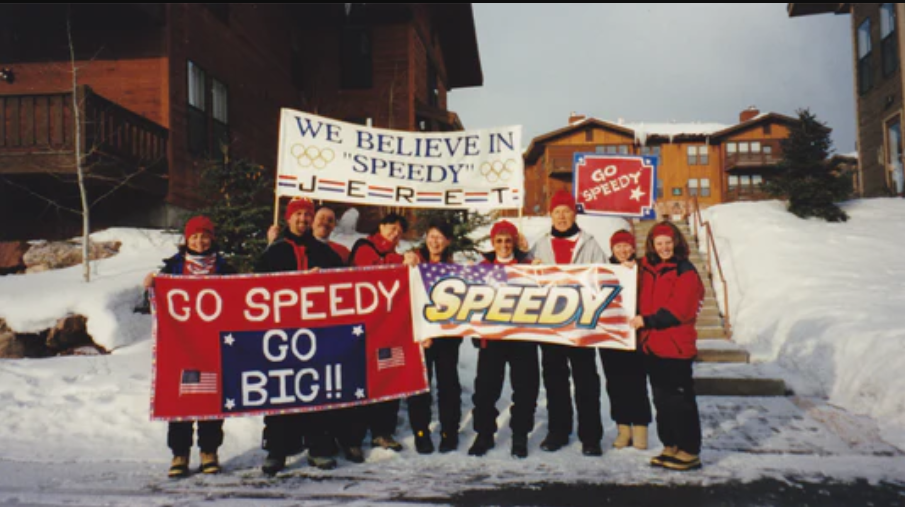
Friends and family showing their support, 2002 Olympic Games
1999 U.S. Junior National Championships, Aerials: Gold
2000 World Junior Championships, Aerials: Bronze
2001 World Junior Championships, Aerials: Bronze
2001 Junior Freestyle Skier of the Year
2002 Olympic Winter Games, Aerials: 9th place
2005 World Cup season, Aerials: 1st place
2006 Olympic Winter Games, Aerials: 7th place
2006 U.S. National Championships, Aerials: Gold
2010 Olympic Winter Games, Aerials: Silver
2012 Inducted into the World Acrobatics Society Hall of Fame
Career Highlights
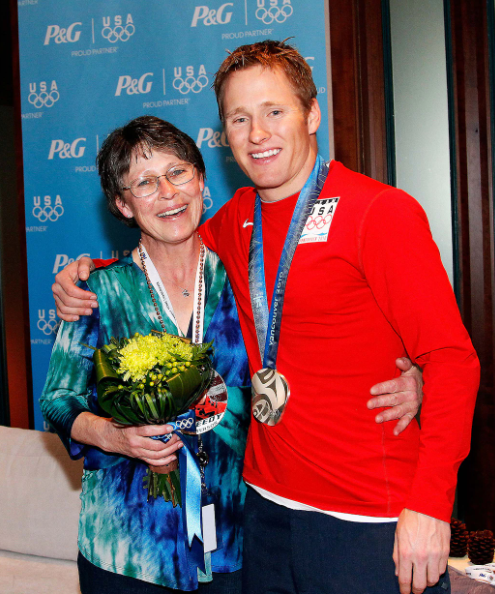
Speedy and his mother, Linda, 2010 Olympic Games
Speedy’s Impact
When Speedy passed away in 2011, his family and friends learned that Idaho was one of the only states in the US without a suicide prevention hotline of its own. Our first mission was to help fundraise and use Speedy's story to help champion the cause. Idaho’s Hotline was re-launched in 2012. During the 2016 legislative session, the State added the hotline back into the budget and partially funds this incredible resource.
A mental health crisis is more common than most people realize. You are more likely to come across a person having a mental health crisis than a person having a heart attack. Where CPR training is common, the same is not true of responding to a mental health crisis. We believe it is crucial to prepare to help our neighbors, friends, relatives, and coworkers when they need help. The Speedy Foundation supports and provides training to increase mental health literacy.
“Sport has tremendous outreach. People look up to athletes, and those athletes have a platform to reach people– Muhammad Ali, Billie Jean King, Magic Johnson. Sports has opened doors and provided an entry point to discuss larger social issues. Well, Speedy is helping us talk about something important and the time has really come for the de-stigmatization of mental illness.” -Mike Ruzek, former TSF board member


